How to Choose the Best Spare Tire from China?
Choosing the best Spare Tire from China requires more than comparing prices or tread patterns. Fitment, load capacity, age, certification, and supplier reliability must work together. China’s automotive industry provides a broad manufacturing base: the China Association of Automobile Manufacturers reported more than 30 million vehicle sales in 2023. That scale creates strong sourcing opportunities, but it also demands careful verification.
Start with the vehicle’s original tire specification. Check size, load index, speed rating, bolt pattern, offset, and clearance around the brake assembly. A tire can look correct and still fail under a loaded vehicle. NHTSA’s TireWise guidance notes that manufacturers may recommend tire replacement after six to ten years, even when tread remains. Therefore, request production dates, storage records, and photographs of sidewall markings before purchase. Old stock is not a bargain.
Professional buyers should request independent test results, factory quality records, and batch traceability. Verify applicable markings, such as DOT or UNECE approval, according to the destination market. Ask whether the wheel supports TPMS sensors and whether the spare includes a valve, jack compatibility, and correct torque specifications. The U.S. Tire Manufacturers Association emphasizes regular pressure checks and visual inspections, which are easy to overlook during import sourcing. They matter greatly.
A supplier’s response reveals practical experience. Can it explain load testing, balancing, rubber storage, and warranty handling? Can it provide consistent samples? Price matters, but consistency matters more. I would not trust a polished catalog alone. One weakness remains: online documents may not reflect current production. Independent inspection is still worthwhile before shipment, especially for emergency-use tires stored for long periods.
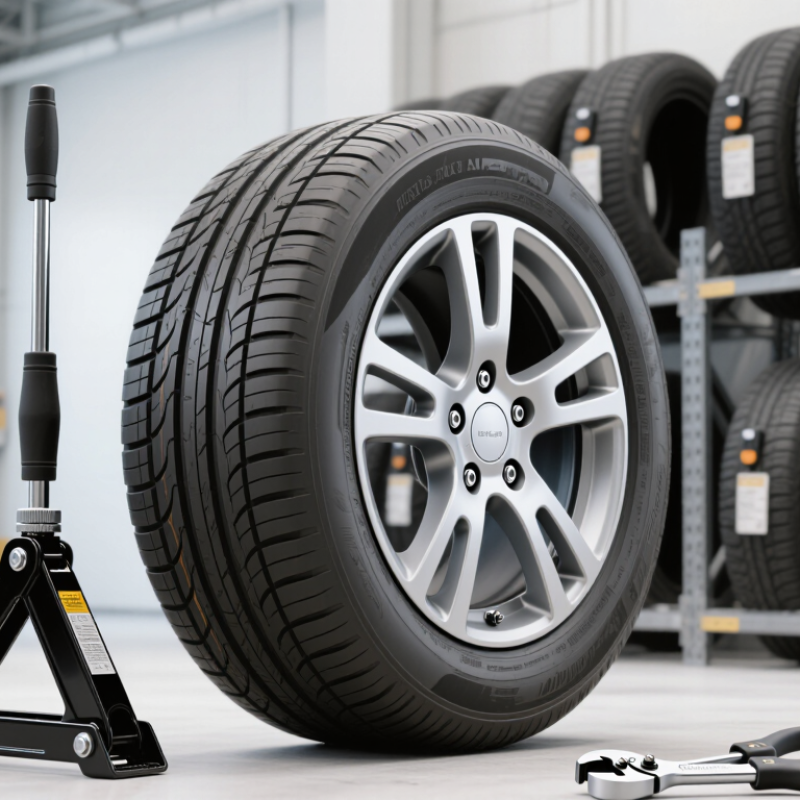
Identify Fit: Match Tire Size, Load Index, and Speed Rating
How to Choose the Best Spare Tire from China?
Identify fit before comparing price. Read the vehicle door placard and owner’s manual, then match tire size exactly. A marking such as 225/65R17 includes width, aspect ratio, construction, and rim diameter. Do not rely only on the old tire. It may already be incorrect.
The U.S. National Highway Traffic Safety Administration reported 738 fatalities and about 32,000 injuries from tire-related crashes in 2017. Correct fit is not a minor detail.
Check the load index beside the size code. This number shows the maximum load capacity at the tire’s rated pressure. The replacement should meet or exceed the vehicle’s original requirement. For example, load index 102 supports 850 kilograms per tire under standardized conditions. Confirm the exact table before ordering. A larger-looking tire may still carry less weight.
Review the speed rating, too. It indicates the tire’s tested speed capability, not a recommended driving speed. A temporary spare may have a lower rating and a strict speed limit printed on its sidewall. Follow that limit.
Ask the Chinese supplier for sidewall photos, production date, test documentation, and inflation specifications. Industry guidance from the Tire and Rim Association supports using standardized load and pressure tables. I once focused too heavily on tread depth. That was a mistake. Age, storage conditions, and valve quality also deserve inspection before installation.
Verify Compliance: Check DOT FMVSS 109, ECE R30, and CCC Standards
When choosing a spare tire from China, compliance should be checked before price or appearance. A tire may look identical to your original equipment but still fail a required market standard. Confirm the exact tire size, load index, speed rating, and temporary-use designation.
For the United States, ask for evidence of compliance with DOT FMVSS 109. Check the sidewall for the DOT marking and Tire Identification Number, then match those details with production records. FMVSS 109 covers requirements such as endurance, high-speed performance, dimensions, and labeling. A PDF certificate alone is not enough. Request test reports linked to the same size, pattern, and factory.
For Europe, verify ECE R30 approval and inspect the molded approval marking on the sidewall. The approval number should match the supplier’s documentation and product photographs. For China, confirm CCC certification when the tire category requires it. Check the certificate holder, factory address, product scope, and validity date. Also inspect the manufacturing date code, bead area, tread condition, and valve stem. Small details matter.
Do not trust vague claims.
I would ask for sample photos before ordering. Yet even this can fail if the shipment differs from the sample. An independent pre-shipment inspection is wiser, especially for fleet or wholesale purchases. Compliance checks are not paperwork decoration; they protect vehicle control when a spare is urgently needed.
How to Choose the Best Spare Tire from China?
Verify the compliance route required by the destination market before purchasing. A value of 1 indicates that the listed standard is generally relevant to that market; 0 indicates that it is not the primary compliance route. Always confirm the latest local requirements, tire size, load index, speed rating, and markings.
Choose Construction: Compare T-Type Temporary and Full-Size Spares
When choosing a spare tire from China, construction matters more than a low quoted price. A T-type temporary spare is narrow, lightweight, and designed for short emergency use. It saves trunk space, but its smaller contact patch can reduce cornering grip and braking confidence. Most require reduced speed and limited distance, so the vehicle handbook must control your decision. Check the exact diameter, bolt pattern, offset, and load rating. Small mismatches create real handling problems.
A full-size spare matches the vehicle’s normal tire dimensions more closely. It usually provides steadier handling and can remain in service longer. This option suits drivers who travel across rural areas, carry heavy loads, or face limited repair access. The trade-off is weight. A full-size wheel may add several kilograms and consume valuable cargo space. It also costs more to ship from China, especially when packaging needs strong protection.
During sourcing, request a clear specification sheet, tread photos, valve details, and test records. Confirm the tire’s production date and storage conditions. I have learned not to judge quality from appearance alone; a clean sidewall can hide poor internal construction. Ask for a sample before placing a large order, then check bead seating, balance, and fitment on the actual vehicle. My own judgment can be imperfect, so independent inspection is worth considering when specifications remain unclear.