
Choosing among the 10 Best AGV AMR Manufacturers for Global Buyers requires more than comparing product catalogs. AGV systems usually follow mapped routes, while AMRs use sensors, software, and dynamic navigation. That difference affects warehouse layout, safety planning, labor needs, and return on investment.
Melonee Wise, a recognized robotics expert and former Fetch Robotics executive, said, “Robots should be tools that make people more effective, not replacements for people.” This principle matters when evaluating every Agv Amr supplier. A strong manufacturer should offer reliable navigation, clear fleet-management software, responsive service, and practical integration support. Buyers should also examine payload range, battery charging, cybersecurity, installation training, and compliance with relevant safety standards, including ISO 3691-4 where applicable.
Real conditions matter.
A robot moving smoothly in a showroom may struggle beside pallets, forklifts, dust, or uneven flooring. Global buyers need evidence from comparable warehouses, not attractive demonstrations alone. This guide considers manufacturer experience, deployment scale, regional support, system flexibility, and long-term operating costs. It also recognizes an uncomfortable limitation: no ranking fits every market. A supplier with excellent hardware may provide weak local maintenance. Another may offer advanced software but require expensive integration work.
The following selection aims to create a practical starting point. It does not replace site surveys, risk assessments, or pilot testing. Careful buyers should question every promise, measure actual workflow data, and test the Agv Amr solution before signing a major contract.
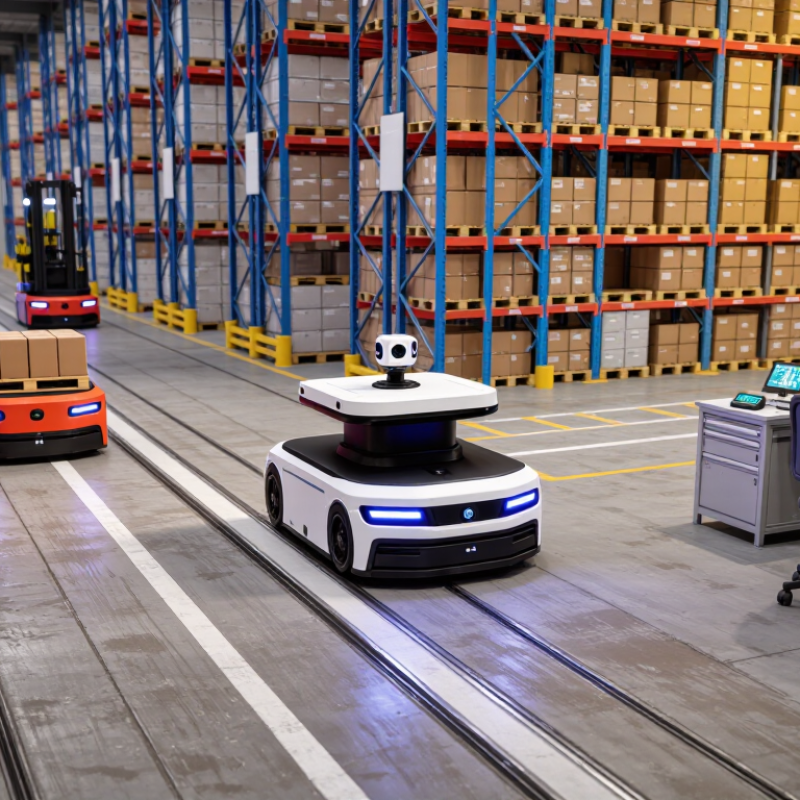
An AGV, or automated guided vehicle, follows a planned route using magnetic tape, reflectors, QR codes, or embedded wires. It works well in stable warehouses with repeatable material flows.
An AMR, or autonomous mobile robot, maps its surroundings and selects routes dynamically. It uses cameras, LiDAR, wheel encoders, and safety scanners to avoid people and obstacles.
The boundary is not perfectly clean. Some modern AGVs now use limited navigation intelligence.
The key difference is decision-making. AGVs usually depend on fixed traffic rules, while AMRs combine localization, fleet software, obstacle detection, and real-time path planning.
Core technologies include SLAM, sensor fusion, wireless communication, battery management, and warehouse-management-system integration. IFR’s World Robotics 2024 report identified transportation and logistics as the largest professional service-robot application in 2023, with sales exceeding 100,000 units. Interact Analysis also reported continued growth in autonomous mobile robot deployments, driven by labor shortages and flexible fulfillment needs.
These figures show demand, not guaranteed return on investment.
Tips: Test one route first. Measure throughput, charging time, blocked paths, and human acceptance.
A robot may navigate perfectly but still fail beside an unreliable lift or poorly labeled pallet.
Buyers should request safety validation, uptime evidence, integration records, and local service capability.
Do not trust a polished demonstration alone.
Pilot results can disappoint, and that is valuable evidence.
AGV and AMR systems are moving beyond pilot projects into warehouses, factories, hospitals, and retail distribution centers. Their value depends on workflow design, not vehicle speed alone. AGVs follow fixed routes, markers, or magnetic guidance. They suit stable, repetitive transport tasks. AMRs use sensors and software to navigate changing spaces. In a warehouse, an AMR can carry totes from picking stations to packing benches while workers focus on order accuracy. Small details matter. Floor quality, Wi-Fi coverage, and pedestrian behavior can affect performance.
Manufacturing plants use AGVs to deliver components between storage areas and assembly lines. This reduces manual cart traffic and supports predictable line feeding. AMRs handle mixed-model production, where parts and quantities change hourly. Yet a poorly timed robot may block a narrow aisle or arrive before operators are ready. That is a real operational risk. Hospitals may use mobile robots for linens, meals, specimens, and pharmacy supplies. They can reduce routine walking, but elevators, infection-control zones, and human consent require careful planning.
Food, beverage, and cold-chain facilities use automated vehicles for pallet movement in chilled environments. Retail centers benefit from inventory scanning and flexible replenishment. Buyers should test peak shifts, not only quiet pilot hours. Safety scanners, emergency stops, access controls, and documented maintenance support dependable operation. Some projects overestimate automation and underestimate change management. That lesson deserves attention. A practical assessment should measure throughput, downtime, charging, handoff delays, and fault recovery before expanding the fleet.
Choosing an AGV or AMR manufacturer requires more than comparing vehicle prices. The International Federation of Robotics reported nearly 200,000 professional service robots sold in 2023. Transportation and logistics robots represented about 113,000 units. This growth increases supplier choice, but it also makes verification essential.
Start with deployment evidence. Ask for comparable sites, payload ranges, route lengths, and peak-hour performance. A warehouse moving 500 kilograms needs different navigation and braking capabilities from a facility handling small cartons. Review fleet software, API access, warehouse-system integration, and recovery procedures after blocked routes. Safety documentation should reference applicable requirements, including ISO 3691-4 for driverless industrial trucks. Check cybersecurity controls, software-update policies, and local compliance support.
Total cost matters more than the quotation. Include batteries, charging equipment, mapping, training, maintenance, spare parts, and downtime. The supplier should provide measurable service targets, such as response time and replacement-part availability. Request a pilot using real racks, uneven loading, and human traffic. Demonstrations can be too clean.
I would not trust a perfect test.
The IFR World Robotics 2024 report also shows that automation demand is expanding across logistics operations. Still, market growth does not prove every supplier’s reliability. Examine audited performance data, customer references, warranty terms, and five-year operating costs. A technically impressive robot may become expensive when integration knowledge remains weak. Capability must be proven on the floor.
Global buyers need more than a long supplier list. They need evidence from factories, warehouses, and real deployment sites. These ten manufacturer profiles represent different strengths across the AGV and AMR market. Some focus on pallet transport, while others build compact robots for picking, sorting, or hospital logistics.
One profile features heavy-load vehicles for factories and distribution centers. Another develops flexible mobile robots with cameras, scanners, and mapping software. A third specializes in clean production areas. There are also manufacturers serving hospitals, retail warehouses, food facilities, and outdoor yards. Several companies offer fleet management platforms that connect robots with conveyors, storage systems, and warehouse software. Their engineering teams usually provide site surveys, route simulations, operator training, and maintenance plans.
Details matter. Buyers should check payload performance, battery charging time, turning clearance, floor tolerance, and recovery procedures. Ask for test records from similar sites. Published speed figures can look impressive. Real floors are rarely perfect. Some manufacturers explain safety functions clearly, but others provide limited evidence about edge cases. That deserves attention. Independent testing is still valuable. A robot may perform well in a demonstration and struggle beside crowded aisles, reflective surfaces, or changing inventory. The strongest profiles show practical installation experience, responsive technical support, transparent specifications, and documented compliance with applicable safety requirements. Regional service coverage also matters, especially when production cannot pause for several days.
Global buyers should judge AGV and AMR manufacturers beyond advertised travel speed. Purchasing begins with clear site data: aisle width, floor quality, payload weight, shift length, and temperature. Request test reports, reference projects, production capacity, and spare-parts policies. A factory visit can reveal more than a polished presentation.
Integration often determines the real project cost. Check whether the vehicle connects with warehouse software, elevators, doors, conveyors, and charging systems. Ask for interface documents before signing. Local engineering support matters when maps change or traffic rules fail during peak shifts. A small pilot with real pallets is safer than a large promise.
Safety evidence must be practical and current. Review risk assessments, emergency-stop behavior, obstacle detection, speed zones, and pedestrian controls. Confirm conformity documents for each target market, because requirements differ by country. Training should cover operators, maintenance teams, and supervisors. Service contracts need response times, remote support limits, spare-parts locations, and clear escalation paths.
A polished demo can mislead. A quiet test floor is not a busy warehouse. Buyers should examine downtime records and software update procedures, not only successful runs. No scorecard is perfect. Still, weighted criteria can expose weak support, unclear integration duties, or unrealistic delivery dates before money and time are committed.
