
Why Choose Flat Lock for Global Apparel Sourcing?
Global apparel sourcing is under pressure. Buyers now expect comfort, durability, traceability, and competitive pricing. Flat Lock responds to several of these demands through low-profile seams, reduced bulk, and strong stretch recovery. It is especially useful for activewear, underwear, base layers, and children’s garments. The seam feels smooth against skin. That detail matters during long training sessions or repeated washing.
The Textile Exchange Materials Market Report 2024 estimates that global fiber production reached about 124 million tonnes in 2023. It may exceed 160 million tonnes by 2030. Those figures expose the cost of short garment lifecycles. WRAP reports that extending clothing use by nine months can reduce carbon, water, and waste footprints by roughly 20–30%. Flat Lock cannot solve overproduction. It can, however, support longer wear when correctly engineered.
Fashion sustainability scholar Professor Timo Rissanen has stated, “The most sustainable garment is the one already in your wardrobe.” His point fits sourcing decisions. A durable seam may help that garment stay there longer. McKinsey’s The State of Fashion 2025 also identifies resilience, efficiency, and supply-chain adaptability as central industry concerns.
Flat Lock is not automatically the best answer. It requires suitable thread, accurate tension, skilled operators, and careful machine calibration. Poor settings can create skipped stitches, wavy seams, or unnecessary production waste. That weakness deserves attention. Suppliers should test seam strength, stretch, wash performance, and skin comfort before scaling orders. A lower unit price means little if returns increase. Reliable sourcing begins with evidence, not attractive samples.
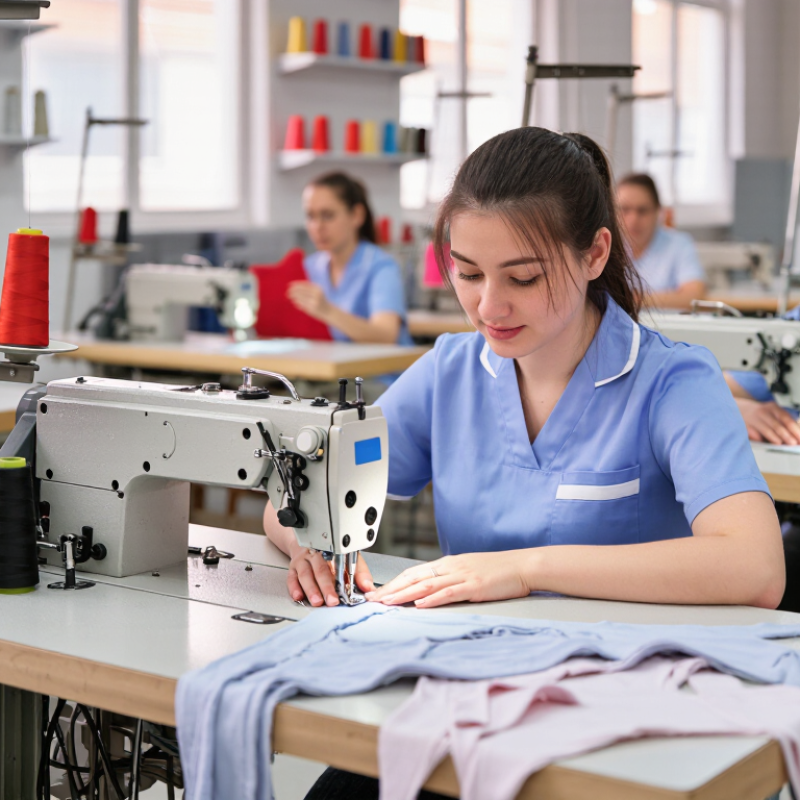
Flat lock stitching is a low-profile seam construction used to join fabric panels with minimal bulk. Unlike a raised overlock seam, it creates a flatter surface against the skin. This makes it useful for sportswear, base layers, underwear, and lightweight garments. The seam usually shows parallel stitch lines on one side and a softer, interlocked structure on the other. It looks simple. It is not.
The core construction depends on coordinated needle and looper threads. During sewing, fabric edges may meet closely or overlap slightly, depending on the machine setup. The needles form visible rows, while loopers secure the thread beneath the fabric. Correct thread tension keeps the seam flexible without causing ripples. Operators must also control fabric feeding speed. Stretch fabric can shift easily. A small error may create uneven spacing or unwanted pressure points.
In production checks, I examine seam width, stitch balance, thread coverage, and recovery after stretching. The seam should lie flat after repeated movement, not only directly after sewing. A clean appearance does not always prove strong construction. That assumption deserves testing. Sampling should include wash trials, extension tests, and close inspection near corners. Different fabric weights may require different thread types, needle sizes, and machine settings. Even experienced teams sometimes overlook puckering at the seam entrance. Careful records make adjustments more reliable during global apparel sourcing.
Typical thread counts across common industrial seam constructions
Flatlock stitching is commonly produced with approximately 4–6 threads, depending on the selected machine configuration and seam design. Its interlooped construction creates a flatter seam profile than many conventional overedge seams, helping reduce bulk and improve comfort in sportswear, underwear, base layers, and other skin-contact garments.
Flat lock stitching can make a garment feel noticeably smoother against the skin. Its seam sits almost level, reducing pressure along shoulders, side panels, and inner legs. This matters in activewear, base layers, underwear, and lightweight garments.
In production trials, fit testers often notice less rubbing during repeated movement. The stitch construction also allows fabric panels to flex without creating a hard ridge. A runner can bend an elbow freely. A child can stretch and play comfortably. Small details matter.
Flat lock is not automatically the best solution. Poor thread tension may cause loose loops, skipped stitches, or seam distortion. Excessive stitch density can also reduce fabric stretch. Sourcing teams should test the actual fabric, not rely only on factory samples. Wash tests, stretch tests, and repeated fitting checks reveal more reliable results.
Seam intersections need special attention. Thick overlaps may still create pressure points, even with flat lock construction. Skilled operators, suitable machines, and consistent quality inspection are essential. Production speed can sometimes be lower than standard overlock sewing. That trade-off deserves honest calculation.
Why Choose Flat Lock for Global Apparel Sourcing?
Flat lock seams suit garments that touch the skin during movement. They join fabric edges with a nearly level stitch surface. This reduces rubbing around shoulders, waistbands, and inner thighs. Activewear often benefits most, especially leggings, running tops, cycling shorts, and training layers. These garments stretch repeatedly and need seams that feel smooth under pressure.
Base layers, underwear, sleepwear, and fitted children’s clothing also gain comfort from flat lock construction. Swimwear can use it when the fabric and thread match the required stretch. Lightweight knit dresses and loungewear may benefit too. In practical sourcing work, I would inspect the seam from both sides. Uneven tension can create ripples, weak points, or an unattractive inner finish. A sample may look excellent on a table, then feel rough after ten minutes of wear. That detail is easy to miss.
Tips: Test seams after washing, stretching, and repeated bending. Ask the factory for stitch specifications, thread details, and seam-strength results. Compare comfort on dry and damp fabric. Check seam width near curves, because tight turns can expose poor control. Flat lock is not automatically the best choice. Heavier fabrics may need another construction method. I have seen teams select it too quickly, then discover bulky edges at hems. A small wear trial can prevent expensive revisions. Also review color consistency, needle marks, and skipped stitches before approving bulk production.
| Apparel Type | Typical Flat Lock Applications | Primary Performance Benefit | Common Fabric Characteristics | Key Sourcing Considerations |
|---|---|---|---|---|
| Activewear and Training Tops | Shoulders, side seams, armholes, sleeve joins, and underarm panels | Low-profile seams help reduce rubbing during repetitive movement and can provide a clean inside finish. | Stretch knits containing elastane, polyester, nylon, or blended performance fibers | Confirm stretch recovery, seam elasticity, needle selection, thread compatibility, and resistance to repeated laundering. |
| Base Layers and Thermal Wear | Torso seams, sleeve seams, side panels, and waistband attachments | A flatter seam can improve next-to-skin comfort under additional clothing layers. | Lightweight, stretchable single jersey, rib, brushed knit, or technical thermal fabric | Check that the seam does not distort lightweight fabric and verify comfort through wear testing rather than visual inspection alone. |
| Underwear and Intimate Apparel | Leg openings, side seams, gussets, waist areas, and bra or brief panel joins | Reduced seam bulk supports comfort in close-fitting garments and helps minimize pressure points. | Fine-gauge stretch knits, microfiber blends, cotton-modal blends, and elastane-containing fabrics | Evaluate seam softness, edge stability, elastic attachment, colorfastness, and appearance after washing. |
| Swimwear | Side seams, bust panels, leg openings, lining joins, and decorative seam lines | Flat construction can support close-fitting silhouettes while maintaining a neat, visible stitch effect. | High-stretch nylon or polyester knits with elastane and, in some designs, lining layers | Test chlorine, saltwater, sunscreen, UV, and repeated-stretch performance; confirm that the seam remains secure when wet. |
| Cycling and Running Apparel | Bib-short panels, inner-leg seams, jersey panels, shoulder joins, and underarm areas | The low-bulk profile is useful in garments exposed to continuous movement and close body contact. | Moisture-managing stretch knits, compression fabrics, mesh, and lightweight polyester or nylon blends | Assess seam placement against movement maps, fabric compression, chafing risk, panel matching, and production consistency. |
| Children’s Stretch Garments | Side seams, sleeve joins, leggings, pajama panels, and soft waistband areas | A smooth internal seam can improve comfort for garments worn for long periods. | Soft cotton-rich jersey, interlock, rib, fleece-backed knits, and stretch blends | Prioritize seam softness, secure thread ends, dimensional stability, wash durability, and age-appropriate safety requirements. |
| Sleepwear and Loungewear | Shoulders, side seams, sleeve joins, neckline areas, and trouser panel seams | Creates a smooth finish that supports relaxed comfort and can add a clean technical detail. | Soft jersey, modal blends, lightweight fleece, brushed knits, and cotton-rich fabrics | Balance seam appearance with softness, shrinkage control, fabric torque, and production speed. |
| Compression and Recovery Garments | Contoured body panels, leg openings, armholes, and high-stretch support zones | Flat seams can help limit raised edges in garments designed for close, body-contouring fits. | High-elastane technical knits, power mesh, engineered compression fabrics, and laminated layers | Validate seam strength under maximum extension, recovery after cycling, panel alignment, and pressure comfort. |
| Key Global Sourcing Checkpoints | Sample construction, seam type, stitch density, thread specification, and seam placement | Consistent comfort, appearance, flexibility, and durability across production batches | Fabric stretch, thickness, recovery, surface sensitivity, and finishing treatments | Approve a sealed reference sample, define measurable tolerances, conduct wash and stretch tests, and inspect both the inside and outside of the garment. |
Note: Flat lock performance depends on the machine configuration, stitch formation, thread, fabric construction, seam allowance, and operator settings. Final specifications should be confirmed through garment-level testing.
Why Choose Flat Lock for Global Apparel Sourcing?
Flat lock quality standards matter when garments cross factories, climates, and inspection teams. Textile Exchange’s Materials Market Report 2024 estimates global fiber production reached 124 million metric tonnes in 2023. It may approach 160 million tonnes by 2030. This scale increases the need for repeatable seam controls, not informal judgment.
In production audits, buyers should check seam width, stitch density, thread tension, and fabric distortion. ISO 4915 helps classify stitch structures, while ISO 6330 supports standardized domestic washing procedures. A reliable flat lock seam should remain smooth after washing, without skipped stitches, open loops, or sharp thread ends. Stretch testing also matters. For sportswear, the seam should extend with the fabric and recover without permanent waviness.
Small details expose weak control.
A practical inspection can include ten garment pieces from different production lots. Measure seam width at the hip, sleeve, and inseam. Compare results against approved tolerances. A difference of only two millimeters can change comfort on close-fitting garments. Colorfastness and dimensional change should follow recognized textile test methods, such as AATCC procedures or equivalent regional standards.
However, laboratory approval is not the whole answer. A seam may pass testing but feel bulky against the skin. This is often missed during remote sourcing. Buyers should request sewn samples, wash them, stretch them by hand, and inspect the inside under direct light. Standards create discipline, but experienced review still catches uncomfortable surprises.
Flat lock deserves attention when global apparel sourcing requires smooth seams, controlled costs, and consistent comfort. Its low-profile construction can reduce bulk in activewear, underwear, and lightweight knit garments. However, lower sewing cost is not automatic. Factory teams must measure operations per garment, thread consumption, rework, and inspection time. A cheaper operation may create higher costs when seam strength or appearance fails.
Material selection also changes the calculation. Textile Exchange’s 2024 Materials Market Report states that global fiber production reached about 132 million tonnes in 2023 and may approach 160 million tonnes by 2030. More material variety means suppliers need verified fabric handling skills. During sampling, buyers should test recovery, stretch, needle damage, and seam opening after washing. Small trials reveal more than attractive quotations. They expose production weaknesses.
Supplier selection should include machine condition, operator training, maintenance records, and documented quality controls. Ask for hourly output under comparable specifications, not optimistic capacity figures. The International Labour Organization emphasizes that decent working conditions and effective workplace systems support productivity and quality in garment manufacturing. That link matters during audits. A supplier with transparent records may cost slightly more, yet reduce disruption risk. Still, flat lock is not ideal for every fabric. I would challenge any forecast based only on labor minutes. Freight, rejected units, development delays, and corrective sampling can quietly erase the expected saving.
The uncomfortable question remains: has the supplier proved performance on your actual fabric, or only on a showroom sample?
