How to Choose the Right Flow Regulator for Global Sourcing?

Choosing the right Flow Regulator for global sourcing requires more than comparing prices and catalog images. A suitable device must match the fluid, pressure range, temperature, connection type, and expected flow rate. Small errors can cause unstable equipment performance, leakage, or unnecessary maintenance. The wrong regulator may look acceptable during a short test.

Experienced sourcing teams examine the complete operating environment. They review pressure-drop data, material compatibility, seal quality, calibration methods, and long-term availability. Supplier capability also matters. Reliable manufacturers should provide technical drawings, test reports, traceability records, and consistent quality-control procedures. Independent audits and sample testing can reveal problems that polished brochures hide.

Global sourcing adds practical challenges. Shipping conditions, regional standards, replacement parts, and technical support can affect the total cost. A regulator used in a clean factory may fail in a dusty workshop. A model suitable for one market may not meet another site’s documentation or installation requirements. Verification is essential.

A clear comparison table helps.

It is not enough.

Buyers should request samples, confirm performance under realistic conditions, and document every assumption. Even careful teams can overlook installation space or future capacity changes. That weakness deserves attention. The best decision balances engineering evidence, supplier reliability, compliance requirements, and lifecycle value. With disciplined evaluation, companies can reduce sourcing risks and select a Flow Regulator that performs consistently across international operations.

How to Choose the Right Flow Regulator for Global Sourcing?

Define the Flow Regulator’s Role in a Global Sourcing System

How to Choose the Right Flow Regulator for Global Sourcing?

A flow regulator is more than a valve in a purchase order. It controls fluid movement, stabilizes pressure, and protects connected equipment. Its role should be defined before supplier selection begins. A clear role prevents mismatched specifications and costly field adjustments.

Start with the operating conditions. Record the fluid type, viscosity, temperature, pressure range, target flow, and connection size. Small details matter. A regulator handling clean water may fail with abrasive slurry or corrosive chemicals. Materials, seals, and internal structures must match the application. Confirm these points through technical drawings, test data, and documented operating limits.

Global sourcing adds practical risks. Suppliers may interpret flow rates differently, or use different testing methods. Request consistent units, calibration records, inspection reports, and traceability documents. Check whether replacement parts are available near the installation site. A low purchase price can become expensive when one seal requires weeks to import. It is also wise to qualify a second source, although maintaining two equivalent designs is not always simple. In real projects, the “best” regulator sometimes changes after installation feedback. Noise, unstable pressure, or difficult maintenance may expose gaps in the original specification. Treat those findings as engineering evidence, not supplier blame.
Identify Application Requirements and Operating Conditions

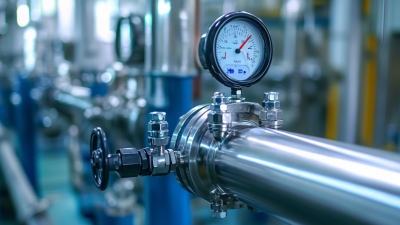
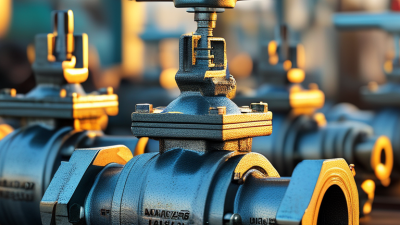
Choosing a flow regulator starts with the application, not the product catalogue. Define the required flow range, pressure limits, fluid type, and temperature. Record normal conditions and occasional extremes. A regulator handling clean water may fail with viscous oil, abrasive slurry, or gas. Small details matter. A narrow operating range can cause unstable control and unnecessary energy loss.

Inspect the installation carefully. Measure pipe size, connection type, available space, and flow direction. Check whether the regulator will face vibration, outdoor moisture, dust, or frequent cleaning. Material compatibility is essential, especially when the fluid may corrode seals or internal components. For sensitive processes, confirm response time, adjustment accuracy, and pressure-drop requirements. Also consider what happens during a power loss or blocked line.

Do not trust average values alone. Ask for tested performance at the actual temperature and pressure. A regulator rated for high pressure may perform poorly at very low flow. I once treated the maximum flow as the main selection point, which overlooked unstable operation during startup. That was a useful mistake. Review maintenance access, inspection intervals, and replacement procedures before approval. Clear operating data makes supplier communication more reliable and reduces costly assumptions.

How to Choose the Right Flow Regulator for Global Sourcing?

Identify application requirements and operating conditions

The chart compares representative inlet-pressure conditions across common flow-regulator applications. Lower-pressure laboratory and water-treatment systems typically require precise low-range control, while process-gas and high-pressure applications require regulators designed for higher inlet pressures and suitable materials. Always confirm flow rate, outlet pressure, temperature, gas or liquid compatibility, and applicable safety standards before sourcing.

Compare Flow Regulator Types, Materials, and Control Methods

How to Choose the Right Flow Regulator for Global Sourcing?

Flow regulator selection starts with the application, not the catalog picture. Needle regulators suit precise, low-flow adjustment. Diaphragm designs reduce contamination risks in sensitive systems. Electronic proportional regulators offer faster response and remote control. Manual control remains simple, but it depends on operator consistency.

APPLICATION CHECK Compare inlet pressure, required flow range, temperature, and response time before requesting quotations.

Material choice affects service life and sourcing reliability. Stainless steel handles many corrosive environments and repeated pressure cycles. Brass can be practical for general industrial service. Engineered polymers may reduce weight, but temperature limits need careful review.

Check wetted materials, seals, thread standards, and pressure-test records. A supplier should provide traceable inspection data, clear drawings, and sample testing procedures. Small documentation gaps can become expensive delays across borders.

Tips:

Ask suppliers to test the regulator at your actual pressure and flow range. Compare manual, pneumatic, and electronic control methods under the same conditions. Confirm calibration requirements and replacement-part availability.

Do not choose the lowest quotation too quickly. In my assessment, buyers sometimes overvalue polished specifications and undervalue field maintenance. That judgment can be wrong. A short pilot order may reveal unstable control, difficult installation, or seal wear before full-volume sourcing.

Evaluate Suppliers, Certifications, Costs, and Supply Risks

When choosing a flow regulator for global sourcing, evaluate the supplier before comparing prices. Ask for material specifications, pressure-range data, flow curves, and recent test reports. A reliable supplier should explain how each unit is calibrated and traced. Factory audits, production samples, and clear inspection records reveal more than a polished catalogue. I once reviewed a low-cost regulator that performed well in a short test but drifted after continuous operation. That small detail changed the purchasing decision.

Certifications deserve careful checking. Confirm the certificate’s issuing body, validity period, production site, and covered product range. ISO 9001 can indicate controlled processes, but it does not prove product performance. Request calibration records and compliance documents relevant to the destination market. Costs should include tooling, sampling, freight, duties, testing, maintenance, and possible replacement delays. A cheaper unit may become expensive after one failed shipment.

Tips: Build a supplier scorecard. Check references. Test samples under real pressure and temperature conditions. Keep a second qualified supplier when practical. Review lead times, minimum order quantities, spare-part access, and communication speed. Also examine supply risks such as single-source materials, regional disruptions, and unstable transport routes. Forecasts are useful, but never perfect. Leave time for inspections and corrective action. One weakness remains easy to overlook: procurement teams may focus on unit price while engineers absorb the cost of inconsistent flow.

Validate Selection Through Testing, Compliance, and Lifecycle Review

Choosing a flow regulator for global sourcing requires more than comparing catalog specifications. Start with measured operating data: flow range, inlet pressure, temperature, fluid properties, connection size, and cleaning conditions. A regulator that performs well in a laboratory may behave differently on a dusty production line. Test a representative sample under normal, minimum, and maximum conditions. Record pressure drop, response time, leakage, and flow stability. Small details matter.

Compliance review should cover materials, pressure ratings, labeling, traceability, and required regional documentation. Request test reports, declarations, calibration records, and change-control procedures. Independent verification adds confidence when the application is safety-sensitive or technically demanding. Do not accept vague certificates. Check their scope, issue date, and testing method. A missing document can delay customs clearance or installation.

Lifecycle review often exposes the real cost. Examine cleaning intervals, seal replacement, calibration needs, spare-part availability, packaging protection, and expected service life. Ask how the supplier handles design changes and discontinued components. Run cycle testing before approval, including repeated starts, stops, pressure changes, and transport vibration. I have seen stable first-run results deteriorate after several hundred cycles. That result is uncomfortable, but useful. Leave room for corrective testing, because the first selection is not always the right one. Judge the regulator by evidence gathered across its full working life.

How to Choose the Right Flow Regulator for Global Sourcing? - Validate Selection Through Testing, Compliance, and Lifecycle Review
Regulator Type Typical Media Nominal Port Size Inlet Pressure Range Outlet / Control Range Typical Flow Capacity Control Accuracy Operating Temperature Wetted Materials Recommended Validation Tests Relevant Compliance Checks Expected Service Life Lifecycle Review Priority
Precision Gas Pressure Regulator Clean, dry compressed air; nitrogen; inert gases 1/8–1/4 in. NPT or BSP 0–20 bar / 0–290 psi 0.05–8 bar / 0.7–116 psi Up to approximately 1,000 Nl/min at 7 bar inlet Typically ±1–2% of full scale −20 to +60 °C Nickel-plated brass or stainless steel; elastomer diaphragm Pressure decay, set-point accuracy, lock-up pressure, hysteresis, burst-pressure sampling Pressure Equipment Directive assessment where applicable; material traceability; RoHS and REACH documentation 5–10 years in clean, dry service Medium: verify diaphragm compatibility and spare-kit availability
High-Flow Air Filter Regulator Industrial compressed air and pneumatic control systems 1/4–1 in. NPT or BSP 0–16 bar / 0–232 psi 0.5–10 bar / 7–145 psi Approximately 2,000–10,000 Nl/min, depending on port size Typically ±3% of full scale −5 to +60 °C; lower temperatures require dry air Aluminum or zinc alloy body; sintered bronze or polymer filter element; NBR or FKM seals Flow-versus-pressure testing, particle-removal efficiency, drain operation, vibration, leak testing ISO 8573 air-quality classification; pressure-rating review; RoHS and REACH documentation 3–7 years; filter and seal replacement normally required High: assess replacement-element cost and local maintenance capability
Liquid Pressure-Reducing Regulator Water, glycol-water mixtures, process liquids, non-aggressive fluids 1/4–2 in. NPT, BSP, or flanged connection 0.5–25 bar / 7–363 psi 0.5–16 bar / 7–232 psi Approximately 5–300 L/min, depending on size and pressure drop Typically ±5% of set pressure 0–80 °C, subject to seal and fluid compatibility Brass, stainless steel, EPDM, FKM, or PTFE, selected by fluid chemistry Hydrostatic pressure, flow stability, seat leakage, corrosion exposure, thermal cycling Potable-water approval may be required; verify NSF/ANSI/CAN 61 or local equivalent when applicable 5–15 years in clean water service High: corrosion, scaling, and elastomer compatibility can dominate total cost
Electronic Mass Flow Controller Clean gases used in laboratory, analytical, and process applications 1/8–1/2 in. compression or threaded connections Typically 0–10 bar / 0–145 psi Application-specific set point; closed-loop control Approximately 0.1–1,000 sl/min, depending on sensor range Typically ±1% of reading plus ±0.5% of full scale 5–50 °C for standard electronics 316L stainless steel, aluminum, PTFE, FKM, or other specified seals Calibration against a traceable standard, zero stability, response time, repeatability, EMC, power interruption recovery EMC and electrical safety assessment; RoHS and REACH; calibration certificate traceability 5–10 years; sensor drift and electronics obsolescence should be reviewed Very high: calibration, firmware, cybersecurity, and replacement policy require control
Sanitary Diaphragm Flow Regulator Food, beverage, biotechnology, and pharmaceutical liquids 1/2–2 in. sanitary clamp or hygienic connection 0–10 bar / 0–145 psi 0.2–8 bar / 3–116 psi Approximately 10–250 L/min, depending on line size Typically ±3–5% of set pressure 2–95 °C; steam-in-place rating must be confirmed separately 316L stainless steel; EPDM, PTFE, or FKM diaphragm and seals Surface-finish inspection, cleanability, seat leakage, pressure cycling, SIP/CIP cycle validation, microbial-risk review 3-A, EHEDG, FDA-contact suitability, or local hygienic-design requirements as applicable 3–8 years; diaphragm replacement depends on cleaning cycles Very high: hygienic design, validation records, and seal-change intervals are critical
Low-Pressure Vacuum Regulator Low-pressure air, vacuum systems, laboratory gas, and packaging equipment 1/8–1/2 in. threaded or barbed connection Vacuum to 2 bar / 29 psi positive pressure −0.9 to +1 bar / −13 to +14.5 psi Approximately 10–500 Nl/min Typically ±2–5% of full scale 0–50 °C Aluminum, brass, stainless steel, silicone, EPDM, or FKM Vacuum-hold test, leak rate, response time, repeatability, pressure cycling, contamination assessment Electrical and EMC checks if equipped with a sensor; material and chemical-compliance documentation 3–7 years in non-corrosive, low-contamination service Medium: focus on seal aging, leakage, and calibration stability
Corrosive-Service PTFE-Lined Regulator Selected acids, alkalis, and chemically aggressive fluids 1/4–1 in. threaded or flanged connection 0–10 bar / 0–145 psi 0.2–8 bar / 3–116 psi Approximately 2–150 L/min Typically ±5% of set pressure 5–60 °C, subject to chemical compatibility PTFE-lined wetted surfaces; PVDF, stainless steel, or alloy support components Chemical-compatibility review, permeation check, pressure cycling, leakage, corrosion exposure, and material identification Local pressure-equipment rules; chemical-resistance documentation; RoHS and REACH where applicable 2–8 years, highly dependent on concentration and temperature Very high: verify compatibility using concentration, temperature, and exposure-time data